Active School: What makes a school ‘active’?
It’s now more important than ever for children to be active. Since the pandemic, the link between physical movement and psychological health has never been more critical. So - what actually makes a school ‘active’?

Active schools are those that have a focus on children being active throughout the school day – not just during PE lessons. But it’s not as easy as it sounds!
The Government’s School Sport and Activity Action Plan back in 2019 set out a range of measures to strengthen the role of physical activity in children’s daily lives, promoting a joined-up approach between parents and teachers. A survey the previous year had found that a third of children were doing less than 30 minutes of physical activity a day – the UK government at the time were aiming for at least 60.
An Active School isn’t just about PE lessons
An active school understands that physical activity should not be limited to PE lessons. Instead, movement should be embedded throughout the day in ways that are accessible, inclusive and enjoyable for all children.
This could include:
- Active lessons
- Classroom movement breaks
- Active playtimes
- Lunch and after school clubs
- Opportunities for outdoor learning
Below I will explore each suggestion one by one…
Keeping children active outside of PE lessons
Active Lessons
Active lessons involve incorporating movement directly into classroom learning activities, rather than expecting children to remain seated for long periods of time. In primary schools especially, children often learn more effectively when lessons are practical, interactive, and physically engaging.
These lessons can be used across almost every subject area. In maths, pupils might complete number trails, relays, or problem-solving activities around the classroom. In English, children could move between stations to find vocabulary clues, act out stories, or complete spelling hunts. In geography or science, teachers can use role play, movement games, or outdoor investigations to bring topics to life.
The purpose of active lessons is not simply to make children move more. They can also:
- Improve concentration and focus
- Increase engagement and participation
- Support memory and retention
- Help kinaesthetic learners (those who learn more through doing, rather than listening)
- Reduce restlessness and low-level disruption
Active lessons can be particularly helpful for younger children, or those who struggle with sitting still for extended periods!
Importantly, active learning doesn’t need to be complicated or time-consuming. Small changes, such as asking children to move to different areas of the classroom to answer questions or complete partner tasks while standing, can help create a more active learning environment throughout the day.
Over time, embedding movement into lessons helps schools create a culture where physical activity becomes a natural part of learning rather than something separated into PE lessons alone.
Classroom Movement Breaks
Primary school children can find it difficult to stay focused for long periods – movement breaks between tasks provide an opportunity to release energy, improve circulation and refocus attention!
These movement breaks are short bursts of physical activity between lessons or learning tasks. They can last anywhere between two and five minutes, and are designed to help children reset – mentally, and physically.
We have a bunch of resources that are perfect brain breaks for you and your class…


These breaks can be especially useful during transitions between subjects or after periods of concentrated work.
Regular movement breaks can contribute to a more active school by:
- Reducing sedentary time
- Improving behaviour and concentration
- Supporting emotional regulation
- Helping pupils feel refreshed and ready to learn
Active Playtimes
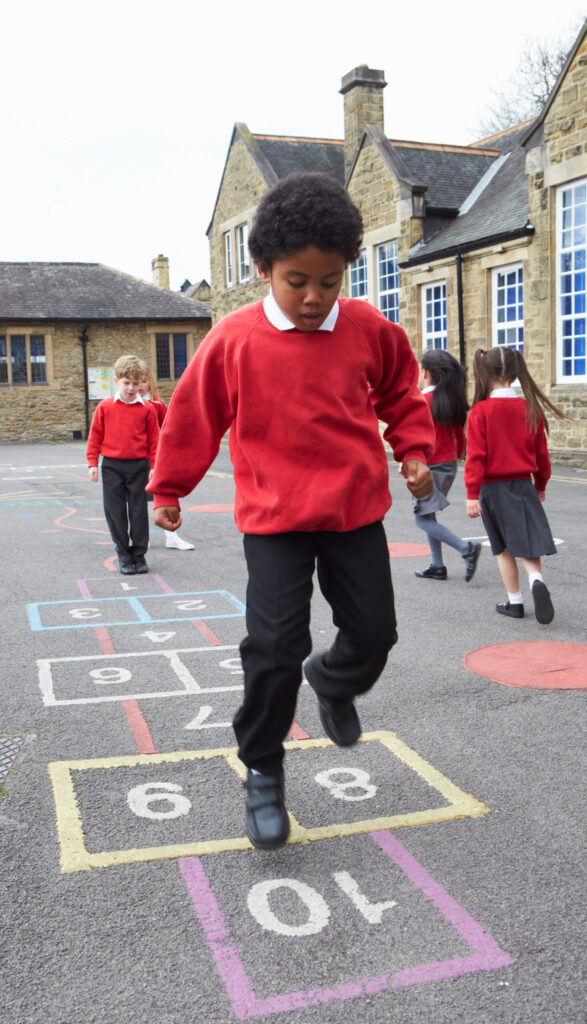
Playtimes are one of the biggest opportunities for increasing physical activity during the school day. However, without encouragement or resources, some children may spend breaktimes standing still, sitting down, or struggling to join activities confidently.
Active schools use playtimes intentionally: to encourage movement, inclusion and social interaction. There are lots of ways that actity can be encouraged to help keep children active…
- Provide playground equipment such as skipping ropes, balls, hoops or beanbags
- Organise activity zones for different games
- Introduce playground markings
- Set up obstacle courses or activity trails
- Assign sports ambassadors/Play Leaders to organise games and encourage children during playtime
- Rotate activities to maintain interest and even add music!
The most effective active playtimes cater for a wide range of interests and abilities. While some children enjoy competitive games like football or basketball, others may prefer dance, imaginative play, skipping or fitness challenges!

Lunch and After School Clubs
Clubs are a great opportunity for children to be active outside of the school day – and can play a major role in helping schools build a culture of movement and participation. They can also provide enriching opportunites that children won’t experience otherwise.
A strong active school will offer a variety of clubs to appeal to different interests, confidence levels and abilities. While traditional sports clubs remain valuable, schools should also consider offering alternatives such as dance, outdoor adventure clubs, running clubs and even yoga.
This way, there will be something for everyone to enjoy. After school clubs are important for everyone. They provide exellent opportunites for children who may not be active outside school or children who lack confidence in PE. They encourage social interaction and teamwork, and help children discover new interests.
Lunchtime clubs can also provide structured activity opportunities for pupils who may otherwise remain inactive during breaks.
An active school focuses on participation and enjoyment rather than selecting only the most talented children. Inclusive clubs can help pupils build confidence, improve wellbeing, and develop positive attitudes towards physical activity.
Outdoor Learning
Outdoor learning is another effective way schools can increase activity levels, whilst enriching children’s educational experiences.
Learning outdoors naturally encourages movement, exploration and practical engagement. And, because outdoor learning can include walking, investigating, building and problem-solving, there’s plenty of opportunity for increased physical activity!

Children will love the opportunity to take their learning outdoors. Just the mention of an outside classroom sparks excitement and curiousity.
Importantly, outdoor learning does not always require extensive outdoor spaces or specialist equipment. Even small playground areas or local green spaces can provide valuable opportunities for active learning experiences. It can be as simple as reading groups taking place outside.
Outdoor learning can also look like:
- Nature walks
- Forest school sessions
- Outdoor maths trails
- Gardening projects
- Geography fieldwork
- Den building or team challenges
These activities all provide physical activity in different ways for children, and can support children who struggle in traditional classroom settings by offering more space, sensory experiences and opportunities for hands-on learning.
By taking learning outside regularly, schools help create a culture where movement, curiosity, and exploration are embedded into everyday education.
Measuring activity across the day
Aiming to be an active school by focusing on the opportunities above is one thing, but can you track it? We’d recommend evaluating:
- How frequently active learning is used in classrooms
- Whether movement breaks are part of daily routines
- How active children are during playtimes and lunchtimes
- The number of opportunities for physical activity before and after school
Some schools choose to carry out simple activity audits where staff record:
- How many active sessions pupils experience weekly
- How often classes leave their seats during learning
- How much time children spend sitting compared to moving
This helps schools identify whether activity is embedded consistently – or only happens occasionally.

What are the benefits of being an active school?
PE – and exercise in general – can help improve a child’s physical, mental and emotional well-being.
Regular exercise can also improve memory and thinking skills, concentration during lessons, classroom behaviours and attendance. As we said at the beginning, the Government’s School Sport & Activity Action Plan back in 2019 was aiming for 60 minutes of physical activity per day. And the recommendation is still the same: the NHS recommends that children and young people from 5 to 18 need to average 60 minutes of exercise a day over a week.
And perhaps one of the most important long-term benefits is that active schools help children develop positive attitudes towards movement from an early age. According to this study, children who experience enjoyable and inclusive physical activity at school are more likely to:
- Remain active later in life
- Value health and wellbeing
- Participate in community sport or recreation
- Understand the importance of balancing movement with screen time
Primary schools play a key role in shaping these habits during a child’s formative years.
What else can help us become an active school?
Active schools do not need to turn every child into an athlete. Instead, focus on building positive habits, improving wellbeing and developing a lifelong relationship with movement.
A few of our other blog posts may help your school become more active:
Setting PE lesson objectives: This will help you hit learning and development milestones with your class – and children will feel a sense of accomplishment!
Promote PE activities at home: Building children’s confidence and enthusiasm for sport and movement can be further bolstered by encouraging PE at home, too.
Make sure you have the right PE equipment: This will make PE lessons – which will likely be your main source for physical activity – even more fun and engaging!
Of course, if you need help with promoting and planning physical activities in school, PE Planning are here to help!
As well as our downloadable PE lesson plans, PE Planning offer further support with additional PE resources such as Lunchtime Games, Classroom PE, Calendar Activities, Mental Health Resources, plus much more to help your school be an Active School!! As always, if you need anything, just get in touch!